by Michael Titus | Jul 7, 2026 | Investment
Quick answer: OFC or LPF? For most open-ended, securities-trading strategies — hedge funds, multi-asset, and retail-style products — Hong Kong fund managers choose the Open-ended Fund Company (OFC), a corporate vehicle with variable capital. For closed-end private...
by Michael Titus | Mar 13, 2026 | Articles, Blog, COMMERCIAL LAW, Investment
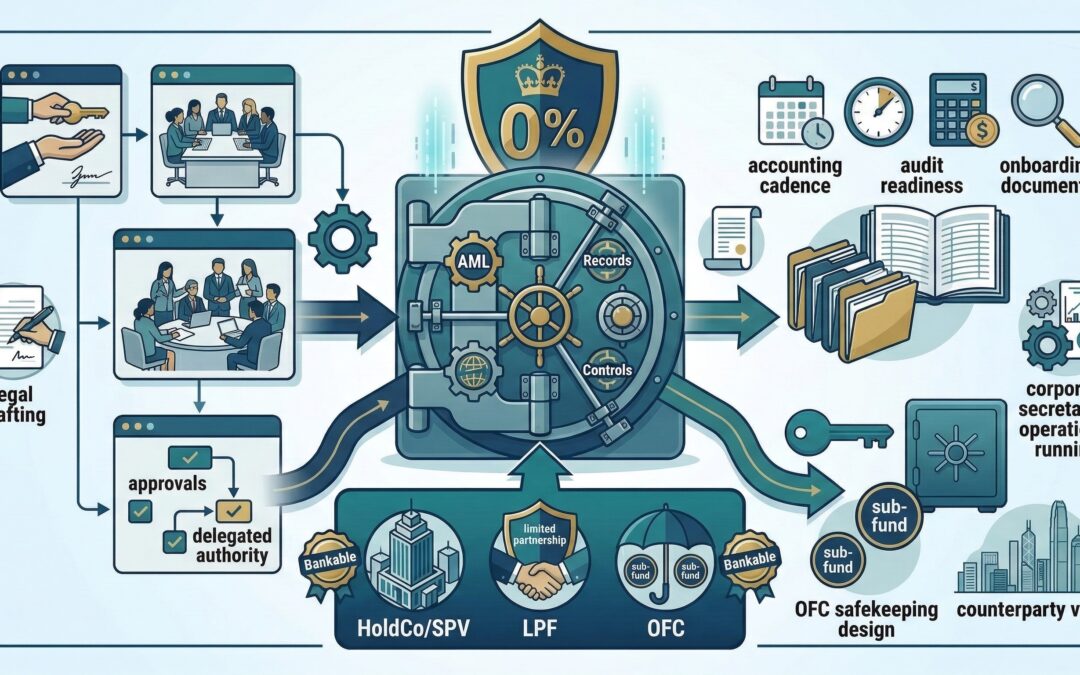
Last updated: 3 March 2026 Most “fund formation” pain is not legal theory. It’s execution. The structure looks fine on a diagram, but then: – bank onboarding stalls, – counterparties ask basic questions no one prepared for, – approvals are unclear,...
by Michael Titus | Mar 13, 2026 | Articles, Blog, COMMERCIAL LAW, Investment
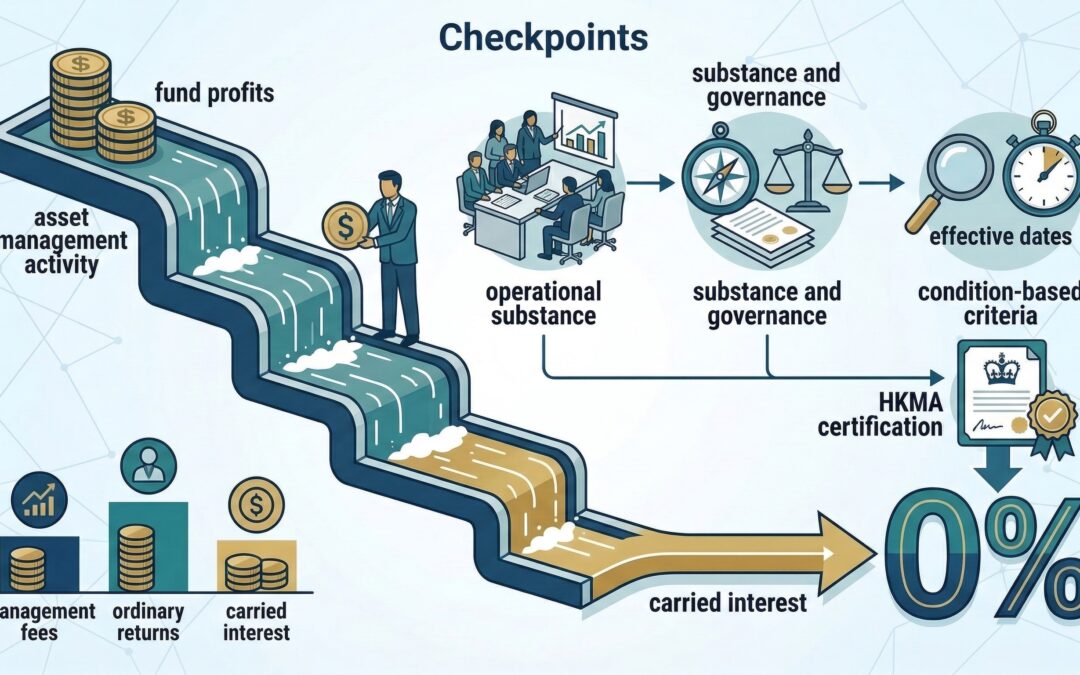
Last updated: 13 March 2026 “0% carried interest” is one of the most misunderstood headlines in Hong Kong funds marketing. The reality is more nuanced: – there is a carried interest concession regime, – it has effective dates and conditions, – and...
by Michael Titus | Mar 13, 2026 | Articles, Blog, COMMERCIAL LAW, Investment
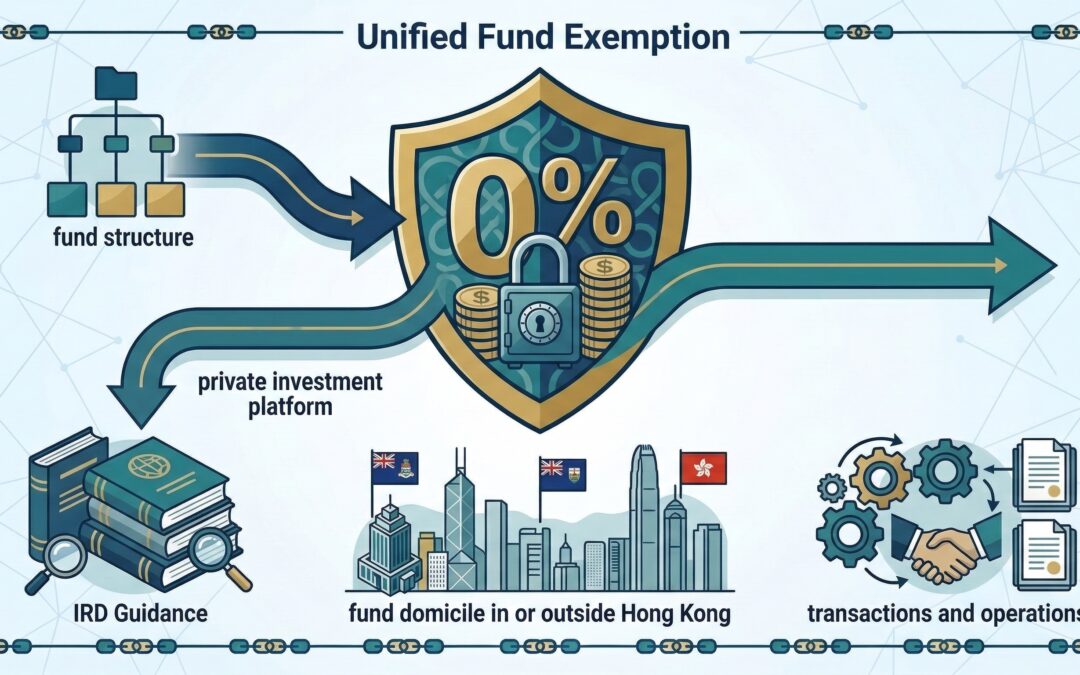
Last updated: 13 March 2026 DIPN 61 is the Inland Revenue Department’s “Departmental Interpretation and Practice Note” explaining how it interprets and applies Hong Kong’s profits tax exemption for funds (often called the “unified fund exemption”). If you are advising...
by Michael Titus | Mar 13, 2026 | Articles, Blog, COMMERCIAL LAW, Investment
Last updated: 22 October 2026 The first question for a private OFC manager is often whether the fund can hold its intended assets with the manager and safekeeping arrangements the structure requires. An application prepared before those two choices are settled may...
by Michael Titus | Mar 13, 2026 | Investment
Last updated: 20 October 2026 The Companies Registry says it normally issues a Hong Kong limited partnership fund’s registration certificate within four working days after receiving an application. That is a useful processing estimate. It says little about when...