
What Happens If You Die Without a Will in Hong Kong? A Clear Guide to Intestacy and Inheritance
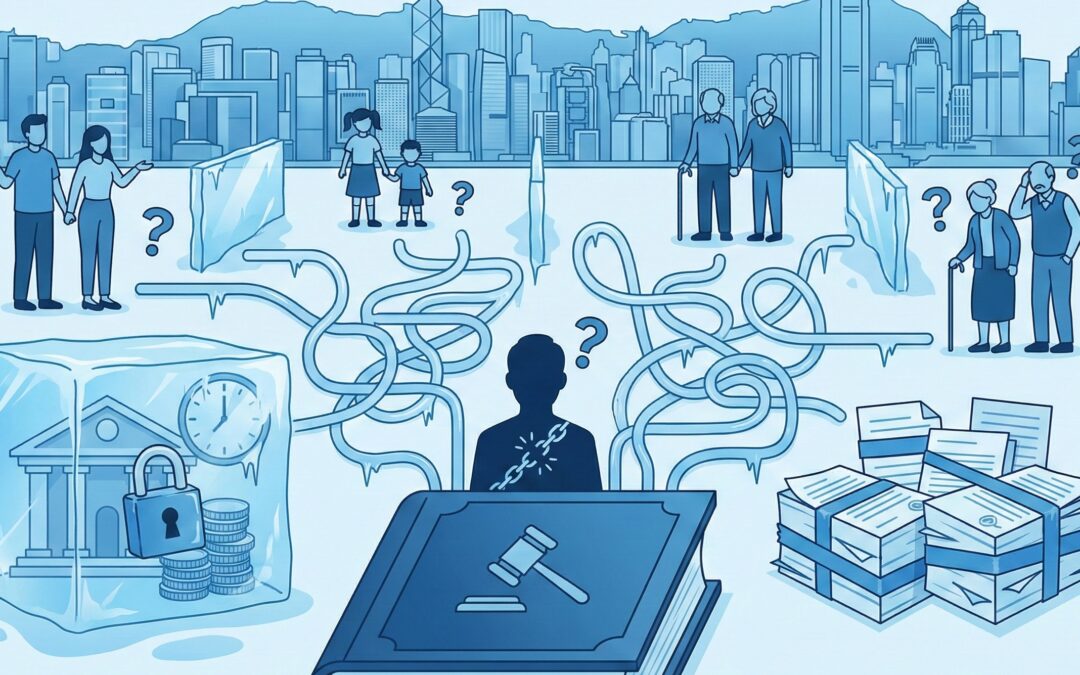
When someone in Hong Kong passes away without a valid Will, their assets do not automatically go to the person they would have chosen. Instead, their estate is distributed strictly according to the Intestates’ Estates Ordinance (Cap. 73). This can lead to outcomes that many families do not expect — including frozen bank accounts, long delays, and distributions that may not reflect the deceased’s wishes.
This guide explains what actually happens under Hong Kong law if a person dies without a Will, using clear, accurate explanations aligned with Cap. 73.
1. What Does It Mean to Die “Intestate”?
A person dies intestate when:
- They leave no Will, or
- Their Will is not valid, or
- Their Will does not cover all of their property (partial intestacy).
In such cases, the deceased’s “residuary estate” — essentially all property not covered by a valid gift — must be distributed based on Cap. 73.
No personal wishes or verbal instructions are considered.
Only the statute applies.
2. What Happens Immediately After Someone Dies Without a Will?
Before the estate can be distributed, the family must go through several steps.
A. Bank accounts and assets are frozen
Financial institutions cannot release funds until the Court appoints a representative. This includes funds in:
- Personal bank accounts
- Bank safety box
- Investment accounts
- Real estate transactions
- Some jointly held assets (depending on structure and bank policy)
B. Someone must apply for “Letters of Administration”
This is the Court’s approval granting authority for someone to manage the estate. The law sets a strict order of priority for who can apply (usually spouse first, then children, then parents, etc.).
The application can take months — and longer if documents are incomplete or family disagreements arise.
3. Who Inherits Under Hong Kong’s Intestacy Rules?
(Statutorily Correct Scenarios Under Cap. 73)**
Hong Kong law distributes the residuary estate based on specific family structures. Below is a reader-friendly summary of the key scenarios, aligned with section 4 of the Intestates’ Estates Ordinance.
For clarity, “children and descendants” means children, grandchildren and further descendants taking through substitution under statutory trusts.
Scenario 1: Surviving spouse only
(no children, no parents, no whole-blood siblings or their descendants)**
If the deceased leaves:
- a husband or wife, and
- no children or descendants, and
- no parent, no sibling of the whole blood, and no descendants of such siblings,
then:
The surviving spouse receives the entire residuary estate absolutely.
(Ref: s.4(2))
Scenario 2: Surviving spouse and children/descendants
If the deceased leaves a husband or wife and children (or grandchildren):
- The surviving spouse receives:
- All personal chattels (household items, personal effects, vehicles, etc.);
- A statutory legacy of HK$500,000 (plus interest from date of death); and
- Half of the remaining residuary estate after paying the legacy.
- All personal chattels (household items, personal effects, vehicles, etc.);
- The other half of the remaining residuary estate is held for the children and descendants under statutory trusts (i.e., equal shares; grandchildren step into a deceased child’s place).
Important note:
The spouse does not automatically inherit everything.
(Ref: s.4(3) & s.5)
Scenario 3: Surviving spouse, no children — but parent(s) or whole-blood siblings survive
If the deceased leaves:
- a husband or wife;
- no children/descendants; but
- at least one parent, or a whole-blood sibling, or a descendant of such sibling,
then:
- The surviving spouse receives:
- All personal chattels;
- A statutory legacy of HK$1,000,000 (plus interest); and
- Half of the remaining residuary estate.
- All personal chattels;
- The other half goes:
- To parent(s) if either or both survive; or
- If no parent survives, to whole-blood siblings (and where a sibling has died, that sibling’s descendants take in their place).
- To parent(s) if either or both survive; or
(Ref: s.4(4) & s.5(1)(a))
Scenario 4: Children/descendants only (no spouse)
If the deceased leaves:
- children or further descendants, but
- no husband or wife,
then:
The entire residuary estate is held for the children and descendants under statutory trusts.
Children share equally; grandchildren may inherit their parent’s share.
(Ref: s.4(5) & s.5(1)(a))
Scenario 5: No spouse, no children — but parents alive
If the deceased leaves:
- no spouse,
- no children or descendants, but
- both parents:
They inherit equal shares absolutely. (Ref: s.4(6))
If only one parent survives:
The surviving parent receives the entire residuary estate. (Ref: s.4(7))
Scenario 6: No spouse, no children, no parents — extended relatives
If none of the above categories apply, the estate follows this statutory order (each group considered only if the previous group fails):
- Whole-blood siblings and their descendants
- Half-blood siblings and their descendants
- Grandparents (equal shares)
- Uncles and aunts of the whole blood (and their descendants)
- Uncles and aunts of the half blood (and their descendants)
If no valid relative exists at any level:
The estate passes to the Hong Kong Government as bona vacantia, though the Government may provide for dependents.
(Ref: s.4(8) & s.4(9))
4. Who Does Not Inherit Under Intestacy?
Unmarried partners
Hong Kong intestacy law does not recognise:
- Boyfriends or girlfriends
- Long-term cohabiting partners (“common-law”)
- Fiancé or fiancée
They receive nothing unless named in a Will or successfully prove that immediately before the death of the deceased were being maintained substantially by the deceased under the Inheritance (Provision for Family and Dependants) Ordinance (Cap. 481).
(Ref: s.3)
Stepchildren (not legally adopted)
They are not treated as children for inheritance purposes unless:
- Legally adopted, or
- Covered under special concubinage provisions (rare and historical).
Friends, charities, carers
They receive nothing unless provided for in a Will.
5. What Property May Be Inherited Automatically Without a Letter of Administration?
Joint tenancy of a real property
The right of survivorship is a significant feature of a joint tenancy. This means that when a joint tenant dies, the surviving joint tenant(s) will automatically be entitled to the deceased’s joint tenant’s interest in the property.
Joint bank account
People may often find a survivorship clause contained in bank documents when opening a joint bank account. However, in the event that disputes arise regarding the intention for opening and/or maintaining a joint account, the Court may not always resolve these disputes based solely on the presumption of survivorship.
6. Practical Consequences of Dying Without a Will
Even in simple families, intestacy can create major problems:
A. Delays accessing assets
Bank accounts, investments, and sometimes jointly held assets may be frozen for months while the court processes the application.
B. Higher administrative burden
Family members must gather documents, obtain certificates, and obtain consents from all people entitled to inherit.
C. Possible conflict among relatives
Disagreements over who should apply for Letters of Administration and who should inherit are common.
D. Outcomes that do not reflect the deceased’s wishes
For example:
- A spouse sharing assets with children
- Parents inheriting instead of a long-term partner
- Siblings inheriting instead of close friends
E. Uncertainty for minors
Without a Will, guardianship of minor children is unclear and must be settled separately.
7. Why Preparing a Will Matters
A legally valid Will allows you to:
- Decide exactly who should inherit
- Protect the beneficiaries of your estate
- Provide for children, including guardianship
- Prevent delays and disputes
- Appoint an Executor you trust
- Ensure financial stability for beneficiaries
A Will is one of the simplest and most effective estate planning tools available.
Conclusion
Dying without a Will in Hong Kong triggers a strict statutory formula that may divide assets in ways you never intended. It also causes avoidable delays, administrative burdens, and emotional stress for your family.
Preparing a Will ensures your estate is handled according to your wishes — not the default rules of intestacy.
Disclaimer
The information in this article is provided for general information only and does not constitute legal advice. Each individual’s circumstances may differ, and the application of Hong Kong law depends on specific facts. You should seek professional legal advice before taking any action based on the contents of this publication.
Contact TITUS
If you need assistance preparing a Will or want advice on estate planning, our team at TITUS is ready to help.
+852 3702 0045
WhatsApp: +852 9720 3003
hello@titus.com.hk
Suite 4002, 40/F, Tower 1, Lippo Centre, Admiralty, Hong Kong
Related reading
• How to Make a Legally Valid Will in Hong Kong
• High Net Worth Divorce: Asset Protection & Prenups
• Contact Titus