
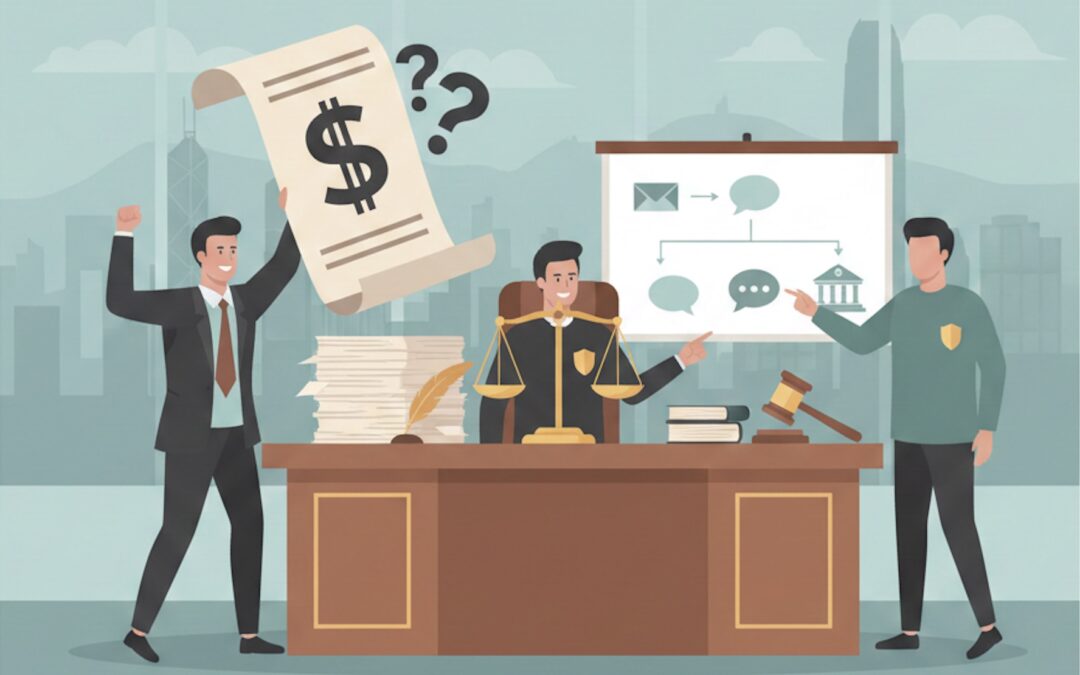
In recent months, more people in Hong Kong have reported receiving legal demands for compensation that feel excessive, unexpected, or simply unfair.
While every individual has the legal right to pursue compensation for loss or injury, a demand for payment is not the same as a legal obligation to pay.
Understanding how compensation claims actually work under Hong Kong law is the first step in protecting yourself.
1. The Right to Claim vs. the Duty to Pay
Hong Kong’s legal system allows any person who believes they have suffered loss, injury, or damage to:
- Send a letter of demand
- Initiate civil proceedings
- Seek monetary compensation
This right of access to justice is fundamental.
However, the burden of proof always lies with the claimant.
They must show, on the balance of probabilities:
- A legal duty existed
- That duty was breached
- The breach caused actual loss
- The compensation amount is reasonable and supported by evidence
Without satisfying these legal elements, a claim will not succeed in court—no matter how strongly it is worded.
2. Why Some Claims Appear “Unreasonable”
Many people feel pressured to settle quickly after receiving a legal letter.
Common reasons include:
- Fear of court proceedings
- Concern about legal costs
- Misunderstanding of legal responsibility
- Aggressive wording in demand letters
In reality, a demand letter is only the beginning of a legal process, not the final decision.
Hong Kong courts carefully assess:
- Medical evidence
- Financial documentation
- Causation between incident and loss
- Proportionality of the claimed amount
If a claim is exaggerated or unsupported, the court may:
- Reduce the compensation
- Dismiss the claim partially or entirely
- Award costs against the claimant
3. How the Civil Claim Process Works in Hong Kong
Understanding the process removes much of the fear.
Step 1 — Letter of Demand
The claimant (or their lawyer) requests payment.
You are not automatically required to pay at this stage.
Step 2 — Negotiation or Pre-Action Communication
Parties may exchange:
- Evidence
- Liability and quantum arguments
- Settlement proposals
Many disputes may be resolved here.
Step 3 — Court Proceedings
If unresolved, the claimant must formally prove the case in court.
The court independently decides:
- Liability
- Quantum of damages
- Legal costs
Only a court judgment or agreed settlement creates a binding payment obligation.
4. What You Should Do If You Receive a Compensation Demand
Stay Calm — Do Not Admit Liability Immediately
Early admissions can affect your legal position.
Preserve Evidence
Keep:
- Photos and video recordings
- Messages
- Medical or repair records
- Witness details
Evidence often determines the outcome.
Avoid Informal Settlements Without Advice
Quick settlements may:
- Overpay an unsupported claim
- Prevent insurance coverage
- Create further legal exposure
Notify Your Insurance Agent
It is important to forward all the relevant letters and court documents to your insurance agent immediately.
Seek Legal Advice Early
A lawyer can:
- Assess liability and evidence
- Respond formally to the demand
- Negotiate or defend the claim
- Protect your procedural rights
Early advice is often far less costly than reacting late.
5. The Key Takeaway
In Hong Kong:
Anyone can make a compensation claim.
But only a proven claim creates a legal duty to pay.
Knowing this distinction empowers you to respond calmly, legally, and strategically—rather than emotionally or under pressure.
How TITUS Can Help
At TITUS, our litigation and dispute resolution team regularly assists clients who face:
- Excessive or unsupported compensation demands
- Personal injury and accident claims
- Civil liability disputes
- Settlement negotiations and court defence
If you have received a compensation demand and are unsure how to respond,
seeking timely legal guidance can make a critical difference.
Disclaimer:
This article is provided for general informational purposes only and does not constitute legal advice. Specific legal advice should be sought based on your individual circumstances.
Related reading
• Navigating Termination: MPF Offsetting, Notice Periods and Unfair Dismissal in Hong Kong
• Understanding MPF Offsetting in Hong Kong
• Contact Titus