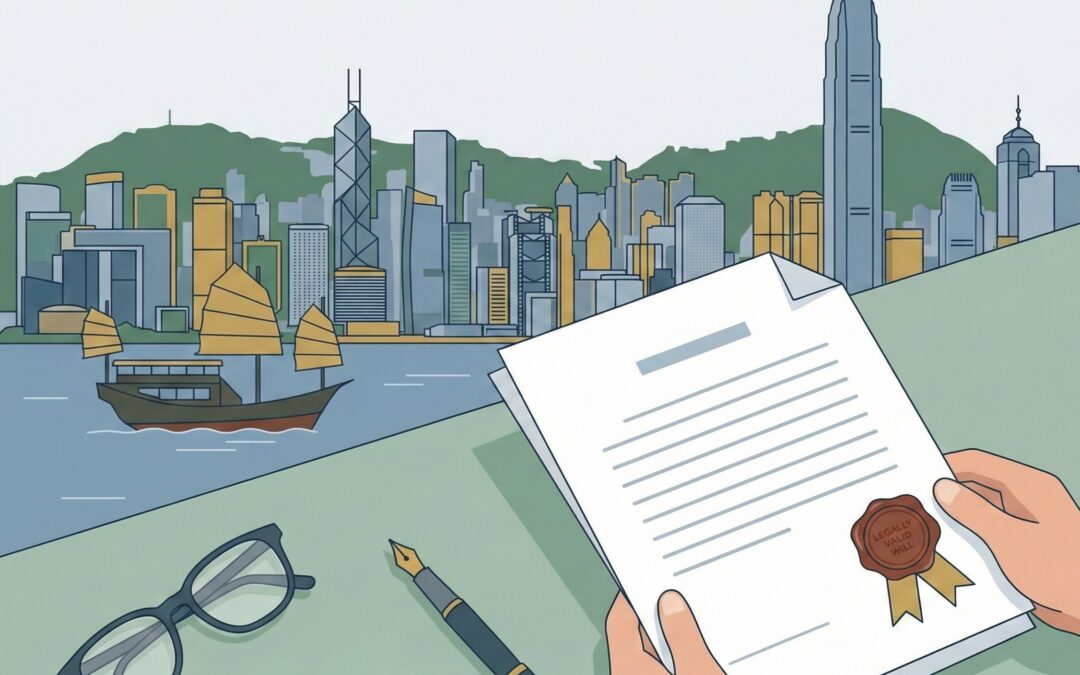
A Practical Guide to Ensuring Your Wishes Are Recognised
Preparing a Will is one of the most important steps you can take to protect your family and ensure your assets are distributed according to your true intentions. Yet many people in Hong Kong either delay making a Will or mistakenly assume that a handwritten note or a verbal promise is enough.
Hong Kong law sets clear requirements for what qualifies as a legally valid Will. If those requirements are not followed, the document may be rejected — and your estate will be distributed according to the intestacy rules, regardless of your wishes.
This guide explains the legal requirements, the common mistakes, and the best practices for preparing a Will that stands up to scrutiny.
1. What Makes a Will Legally Valid in Hong Kong?
In Hong Kong, the requirements for a valid Will come mainly from the Wills Ordinance (Cap. 30). For a Will to be recognised by the court, it must meet all of the following conditions:
A. The Will must be in writing
A Will can be written:
- By hand
- Typed
- Printed
But it must be a physical written document.
Hong Kong does not currently recognise electronic Wills, video Wills, or digital signatures for testamentary purposes.
B. The Will must be signed by the testator
The person making the Will (the “testator”) must:
- Sign, and
- Intend the signature to give effect to the Will.
A simple signature is sufficient; initials, marks, or a chop may be acceptable in limited circumstances, but should be avoided unless strictly necessary.
C. The Will must be signed or acknowledged in the presence of two independent witnesses
This is one of the most important legal requirements.
Both witnesses must:
- Have seen the testator’s signature;
- Then sign the Will themselves, in the testator’s presence.
D. Witnesses cannot be beneficiaries
A witness cannot be:
- A beneficiary of the Will, OR
- The spouse of a beneficiary.
If they are, any gift to that beneficiary becomes invalid, although the rest of the Will may still stand.
This is one of the most common mistakes people make.
E. The testator must have mental capacity
The testator must understand:
- The nature and effect of a Will
- What assets they own
- Who might reasonably expect to benefit
A Will made under duress, confusion, or diminished capacity can be challenged.
F. The testator must act voluntarily
A Will is invalid if the testator is pressured, coerced, or improperly influenced by another person.
2. What Should a Proper Will Contain?
While there is no strict required format, a well-drafted Will generally includes:
A. Personal details
Full name, Hong Kong ID number, and address.
B. Appointment of an Executor
An Executor is the person responsible for:
- Applying for probate
- Managing and distributing the estate
- Handling outstanding debts
Choosing the right Executor is crucial.
C. A clear list of beneficiaries
This defines who should inherit, and in what proportions.
Beneficiaries may include:
- Spouse
- Children
- Parents
- Relatives
- Friends
- Charities
You may also specify fallback beneficiaries for situations where a primary beneficiary passes away first.
D. Specific gifts (if any)
For example:
- Property
- Bank savings
- Jewellery
- Personal items of sentimental value
Specific gifts must be clearly described to avoid disputes.
E. Distribution of “the remainder”
Also called the residuary estate, this covers everything not specifically mentioned.
This is essential — without it, the residuary estate not addressed in the Will would be distributed in accordance with the Intestates’ Estates Ordinance 1971 (Cap. 73).
Distribution of intestate estate is covered in detail in.
F. Guardianship provisions (if children are minors)
If both parents pass away, the person nominated in the Will becomes the preferred guardian. This prevents uncertainty and conflict.
G. Funeral or other instructions (optional)
These are not legally binding, but they help families understand the testator’s preferences.
3. Common Mistakes That Make a Will Invalid (or Problematic)
Even small drafting or signing errors can render a Will invalid or lead to disputes. The most common mistakes are:
A. Using beneficiaries as witnesses
This automatically voids the gift to that witness.
It happens far more often than people realise.
B. Missing witness signatures
If witness’s signature was missing, the Will may be rejected.
C. Ambiguous wording
Phrases like “I give my property to my family” or “Share equally among my children” can create conflicts.
D. Not revoking previous Wills
Failing to include a “revocation clause” can create confusion.
E. Handwritten Wills with unclear or sloppy terms
Handwritten Wills often create:
- Interpretation disputes
- Questions about authenticity
- Problems reading unclear handwriting
They are legally recognised, but risky in practice.
F. Amendment of a Will
Any subsequent amendment or alteration to a Will must be done in the manner the testator executes a Will, otherwise the amendments or alteration shall be invalid.
G. Subsequent marriage
A marriage subsequent to creation of a Will shall be revoked unless expressly indicated in the Will.
H. Not updating the Will after major life events
The Will may no longer reflect the testator’s wishes after events such as:
- Divorce
- New children
- Acquiring property
- Death of a beneficiary
4. Why DIY Wills Often Cause Problems
Many people attempt to use templates or online guides. However, the risks include:
- Incorrect witnessing
- Invalid gifts
- Contradictory clauses
- Failure to account for Hong Kong-specific rules
- No consideration of MPF nominees
- No consideration of foreign assets
- Unclear treatment of joint property
- Lacking information of executor or beneficiaries
- No backup beneficiaries
- No executorship provisions
- Informal amendments
Often, the cost of resolving a defective Will after death far exceeds the cost of preparing a proper one during life.
5. Best Practices for Preparing a Will in Hong Kong
A. Make sure the Will is properly signed and witnessed
This is where most DIY Wills fail.
B. Keep the original document safe
Only the original can be submitted for probate.
Submitting photocopies may lead to additional court procedures and risk of litigation.
C. Inform your Executor
They should know:
- They have been appointed
- Where the original Will is stored
- Where your assets locate
- Any relevant details that may affect estate administration
D. Review and update regularly
A Will should be reviewed every few years or when:
- You marry or divorce
- You have children
- A beneficiary dies
- You acquire significant new assets
E. Seek professional advice
A well-prepared Will minimises the risk of disputes, tax issues, or unintended outcomes — especially where:
- There are complex family dynamics
- Assets are held in multiple jurisdictions
- Beneficiaries include minors
- There is real estate involved
- There are significant investment portfolios
Conclusion
A Will is one of the most important documents you can prepare in your lifetime. By following Hong Kong’s legal requirements and avoiding common pitfalls, you ensure that your loved ones are provided for, your wishes are respected, and your estate is administered with clarity and certainty.
Proper planning today prevents unnecessary stress and conflict tomorrow.
Disclaimer
The information in this article is provided for general guidance only and does not constitute legal advice. Each individual’s circumstances may differ, and the application of Hong Kong law depends on specific facts. You should seek professional legal advice before taking any action based on the contents of this publication.
Contact TITUS
If you would like help preparing a legally valid Will or have questions about estate planning, our team at TITUS is ready to assist.
Tel: +852 3702 0045
WhatsApp: +852 9720 3003
info@titus.com.hk
Suite 4002, 40/F, Tower 1, Lippo Centre, Admiralty, Hong Kong